FOR INDIAN SCHOOL LEADERS & PHYSICS EDUCATORS
Students do great in Class 10.Why does Class 11 Physics feel unfamiliar?
A one-month Physics bridge course from US-based icanlearnit, helping students build confidence, clarity and enthusiasm—and connect school learning with the reasoning used in competitive exams.
Leading Indian scientists and engineers across the globe, helping the next generation back home.
 Max Planck Institute for Nuclear Physics


 Meta


 icanlearnit.
01 / THE CURRICULUM CONNECTION
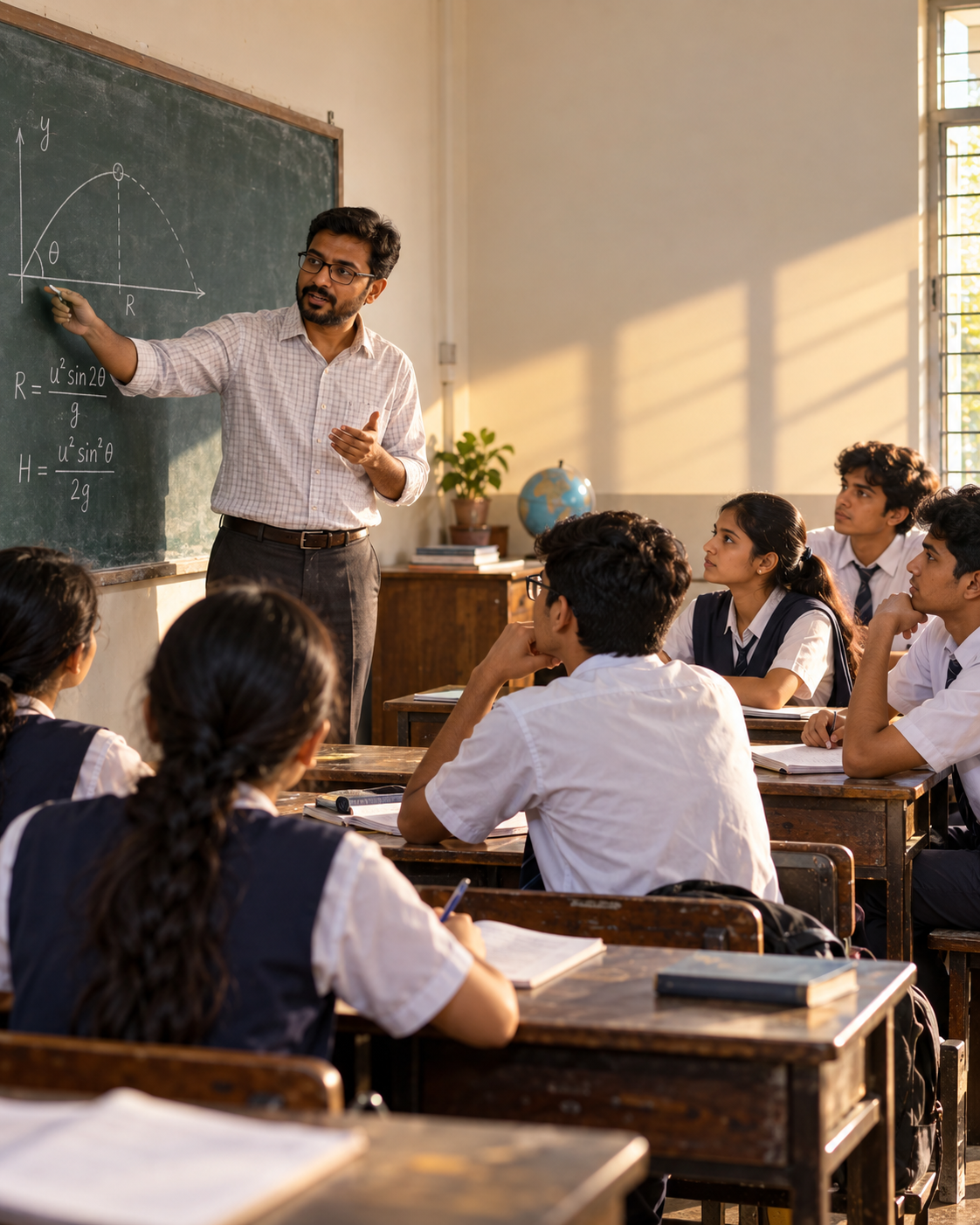
A simple Physics question.
Several mathematical tools.
Understanding the question means understanding the mathematics behind it. These tools develop across different chapters and school years.
A ball is launched at 20 m/s, at 30°.
What is its vertical velocity after 2 seconds?
From the course · Take g = 10 m/s²
Functions & graphs
Describe position and velocity over time.
Class 11 · Relations & Functions; Straight LinesTrigonometry & vectors
Resolve a launch into horizontal and vertical motion.
Class 11 · Trigonometric Functions / Class 12 · VectorsRates of change
Connect position, velocity and acceleration.
Class 11 · Limits and DerivativesIntegration
Recover displacement from changing velocity.
Class 12 · IntegralsPhysics introduces these tools too. The course gives students time to explore their meaning and connections.
CBSE Physics 2026–27 ↗ · Mathematics ↗
Classroom teaching order varies by school.
02 / THE SHARED FOUNDATIONS
Different chapters.
The same underlying idea.
Three questions from the capstone look different. Trace them back and the same idea appears: rate of change.
03 / THE COURSE JOURNEY
Our course brings these ideas together
through physical questions.
Measurement, graphs, functions, sequences, calculus, trigonometry and vectors develop and reconnect throughout the course.
Build the reasoning.
Worked examples, guided questions and independent practice help students build the reasoning themselves.
Follow the progress.
Diagnostic assessments identify gaps, while the supporting platform organizes coursework and helps teachers follow progress and homework completion.
Explore the eight course episodes
Episode 1: What exactly is a unit or measurement?
Measurement, units, metric prefixes, order of operations, and combining units.
Episode 2: Vectors are all around you
Number lines, position, direction of change, angles, radians, and time.
Episode 3: It all comes together
Displacement, graphs, slope, rates of change, velocity, and recording a rocket’s motion.
Episode 4: Pattern finding
Linear and quadratic patterns in equations, graphs, and tables; functions and motion.
Episode 5: Exploring differentiation
Derivatives from first principles, then position, velocity, and acceleration.
Episode 6: Divide and Rule — Part 1
Sequences, sums, displacement from velocity, and building area with rectangles.
Episode 7: Divide and Rule — Part 2
Riemann sums, definite integrals, unit-circle trigonometry, and sine and cosine in motion.
Episode 8: Two Dimensional Vectors
Coordinates, independent directions, projectile motion, and choosing useful axes.
A separate capstone applies these foundations to work and energy, gravitation, electrostatics, rotation and electromagnetic induction.
04 / THE POSSIBILITIES
See what these foundations
make possible.
“Why should I study this?” Professionals share actual applications from Physics research, AI and technology, helping students see why these ideas are worth studying.
Leading Indian scientists and engineers across the globe, helping the next generation back home.
- Max Planck Institute for Nuclear Physics
- Meta
Individual professional affiliations.
Meet the people behind the possibilities.
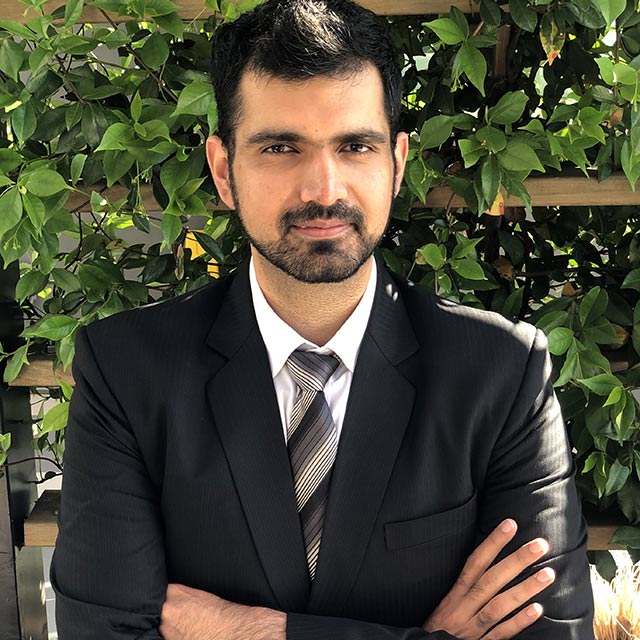
Machine learning & security
Dr Sunpreet Singh Arora
Visa
Visa AI researcher whose fingerprint technology helped police unlock a murder victim’s phone.
Visa profilePhysics research
Dr Shikha Bhadoria
Max Planck Institute for Nuclear Physics · Heidelberg
Max Planck physicist exploring how intense light creates matter and accelerates particles.
Institute profile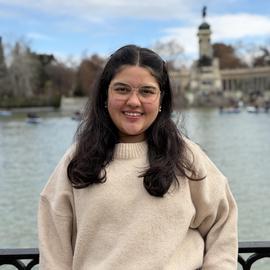
Machine learning for cancer research
Rashika Jakhmola
Goethe University Frankfurt · DKTK / DKFZ
Mathematics graduate turned AI researcher, using machine learning to understand cancer.
Research profile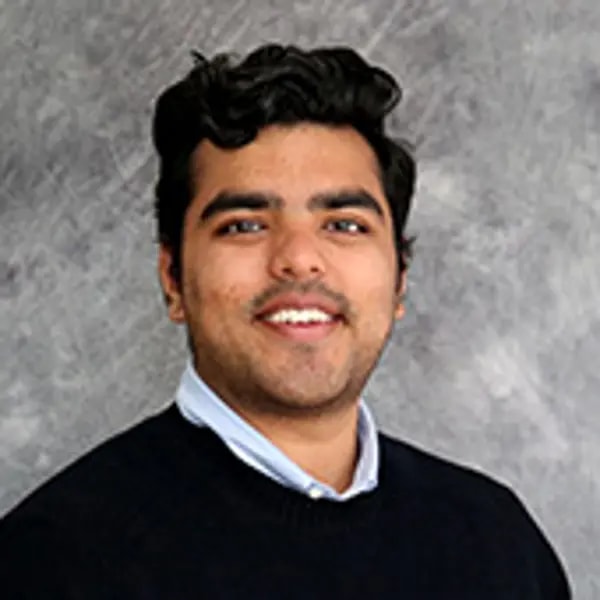
Energy & climate research
Avi Jakhmola
Chalmers University of Technology · Sweden
Climate researcher published in Nature Energy, using mathematics to explore the future of clean energy.
University profileSoftware engineering & mentoring
Aaron Alphonsus
Spotify
Spotify software engineer and machine-learning researcher who taught Python through Stanford’s Code in Place.
LinkedIn profileSemiconductor design
Jagdish Mohapatra
Broadcom
Broadcom engineer with experience at Meta, designing the processors and hardware that make modern computing possible.
LinkedIn profile
Materials research
Dr Aditya Moudgal
Idaho National Laboratory · WPI PhD
Idaho National Laboratory scientist connecting experiments and mathematical models—from solar-cell silicon to nuclear technology.
Research profile
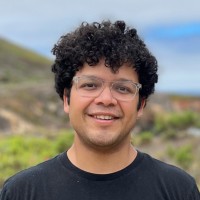
Founder · Physics teaching & learning research
Rahul Jakhmola
icanlearnit · Ex-Amazon
Physics teacher and learning researcher bringing experience from Amazon and Maruti Suzuki into how students build understanding.
LinkedIn profile05 / THE CONFIDENCE
Stronger understanding
to bring into school lessons.
Our aim is to help students return to school lessons with stronger understanding, greater confidence and less dependence on additional tuition.
We’re inviting educators to help shape the course around the needs of students and teachers through a no-cost school pilot.
Be part of shaping the course
A 30-minute conversation to share your thoughts and discuss the pilot. Our meeting calendar will be added here soon. If you received our invitation email, reply “Yes” to arrange a conversation.
Practical questions about the pilot
Which students is the course for?
Students moving from Class 10 to Class 11. The course develops the mathematical ideas used in Physics, including units, vectors, graphs, and calculus, with worked examples and questions for practice.
What does the bridge course cover?
This invitation is for the Physics bridge course. Its focus is on foundations and their application. The capstone chapter brings those tools together in applications from later Physics topics.
How long is the school pilot, and what does it cost?
The school pilot runs for one month and is offered at no cost to participating schools. We would discuss delivery arrangements and student commitment with your school before agreeing on participation.
What would the school and its teachers need to do?
The introductory conversation is where we would discuss curriculum fit, delivery, student commitment, and teacher involvement. Your feedback would help us refine the course and supporting platform for students and teachers.
What will the 30-minute conversation cover?
We will introduce the course, hear your professional feedback, and discuss whether the pilot could be useful for your school.